CG-101 (CAS 10025-78-2, EINECS 233-042-5) Trichlorosilane
The chemical name of our silane coupling agent CG-101 is trichlorosilane, sometimes also referred to as silicochloroform, and its CAS (chemical abstracts service number) is 10025-78-2. It is the essential raw material for producing polycrystalline silicon and silane coupling agent.
The basic production process of silane coupling agent CG-101 is as follows: the Si is reacted with HCl at high temperature. And the hydrogen is used to carry reduction reaction with silicon tetrachloride. During this process, catalyst with aluminum compounds should be used.
CG-102 (CAS 2487-90-3, EINECS 219-637-2) Trimethoxysilane
The trimethoxysilane is a vital intermediate of synthetic functional organosilicon compounds, and together with polymers with ethylenic linkage ends, it can take place the addition reaction, and under the affect of steam, it can produce Si-OH linkages. Besides, cross-linked polymers will be formed by further self-condensation or condensation together with dialkyl silicone oil. And these cross-linked polymers can be used in various fields, such as adhesives, coatings, organosilicon modified polymers, hydrogenation reagents, surface treatment, etc.
CG-201 (CAS 2550-06-3, EINECS 219-844-8) 3-Chloropropyltrichlorosilane
The 3-Chloropropyltrichlorosilane is the essential monomer, and as the main material to produce silane coupling agent series products, it can also be processed into high-grade silane coupling agent.
CG-202 (CAS 5089-70-3, EINECS 225-805-6) 3-Chloropropyltriethoxysilane
The 3-chloropropyltriethoxysilane is the essential materials in producing different silane coupling agents, like Si-69 and KH-550.
As a kind of rubber processing aid, it can be used to couple inorganic fillers in order to enhance their physical and mechanical properties of various halogenated rubbers, such as neoprene, chlorobutyl rubber, chlorosulfonated polyethylene, etc.
It can also be used to compose organic silicon compounds with quaternary ammonium salt cations. With good surfactivity, and sterilizing, deodorizing, and antistatic capacity, these compounds can be used as anti-mildew agents as well as deodorants.
CG-203 (CAS 2530-87-2, EINECS 219-787-9) 3-Chloropropyltrimethoxysilane
As a kind of rubber processing aid, it is can be used to couple inorganic fillers of halogenated rubbers, which can help to improve the physical and mechanical properties of halogenated rubbers, such as neoprene, chlorobutyl rubber, chlorosulfonated polyethylene, etc.
The 3-Chloropropyltrimethoxysilane can also be used to compose organic silicon compounds with quaternary ammonium salt cations. Due to their special capacities of sterilizing, deodorizing and being antistatic, and good surfactivity, these compounds can be used as anti-mildew agents and deodorants.
CG-205 (CAS 18171-19-2, EINECS 242-056-0) 3-Chloropropylmethyldimethoxysilane
1. As a kind of widely used intermediate, it can not only be used to produce various coupling agents, but also to make special kings of silicon oils.
2. In rubber industry, this 3-chloropropylmethyldimethoxysilane can be used to improve the intensity of polyurethane elastomer by introducing polar group of chloropropyl. And it can also be applied in composing vulcanized rubber that features low permeability and rolling resistance, and high elasticity and elongation rate. Furthermore, it can also be employed in producing bulletproof solid tyre in military.
3. In plastics industry, it can be used to effectively restrain the dialysis of polyvinyl chloride (PVC) plasticizer, in which way it can help to keep the PVC clean and hygienic. It can also be used as the absorbent of polyurethane foams so as to promote their weatherability.
4. In textile industry, it can be processed into fabric treatment agent to often and elasticize textiles. In this way, it can help to prevent the textiles from yellowing, as well as to improve their dyeing properties.
5. In the printing industry, it can be made into electronegative toner, which can be used in xerography, image developing, and so on.
CG-501 (CAS 681-84-5, EINECS 211-656-4) Tetramethoxysilane
The Tetraethoxysilane is mainly employed in electrical insulating materials in the electronic industry, and treating agents and coagulants of optical glass. Besides, it can be used in the synthesizing of organic silicon.
CG-502 (CAS 78-10-4, EINECS 201-083-8) Tetraethoxysilane
The Tetraethoxysilane can mainly be used in the production of chemical-resisting and heat-resisting coatings, organosilicon solvents and precision casting binders. When completely hydrolyzed, it can form fine silicon oxide powder that can be used to produce fluorescent powder.
Moreover, it can not only be used to improve the performance of other resins, but also be employed as the raw material to make silicon macromolecular compounds.
CG-602 (CAS 3069-29-2, EINECS 221-336-6) 3-(2-Aminoethylamino)propyl-dimethoxymethylsilane
1. As a kind of super-soft finishing agent for various organosilicon, it can be used to modify the properties of silicone oil so as to improve its affinity for fiber, thus making the oil soft, smooth, pendulous, anti-static, washable, anti-creasing, etc.
2. The 3-(2-Aminoethylamino)propyl-dimethoxymethylsilane can be used in silane curing and polysulfide sealant or polysulfide seal gum. And it can also be employed in the silicone (polysulfide) sealant to improve its adhesive power for base materials, like cement, copper, glass, etc. During the curing process, there is no bubble and the color is light.
3. Moreover, it can also be used in phenolic aldehyde and epoxy resin to improve the intensity of composite materials and electric properties under low frequency condition.
KH-550 (CAS 919-30-2, EINECS 213-048-4) 3-Aminopropyltriethoxysilane
1. It can be employed in the mineral-filling thermoplastic and thermosetting resins, such as phenolic aldehyde, polyester, epoxy, PBT, polyamide,carbonic ester, etc.
2. It can be used to improve the physical and mechanical properties and wet electric properties of plastics, like its bending strength, compressive strength, and shear strength in dry and wet states. Besides, it can also improve the wettability and dispersity of these fillers in the polymers.
3. As a kind of excellent adhesion promoter, the 3-Aminopropyltriethoxysilane can be widely employed in polyurethane, epoxy, nitrile, phenolic binders and sealing materials; it can be used to improve the dispersity of pigment, as well as to enhance the adhesiveness of glass, aluminum and iron; and it can also be applied to polyurethane, epoxy and acrylic acid latex paints. In the process of resin sand casting, it is capable of increasing the adhesiveness of resin silica sand, as well as enhancing the intensity and moisture resistance of molding sand.
4. In the process of producing glass fiber cotton and mineral cotton, it can help to reinforce the moisture resistance and compression resilience by adding it into the phenolic aldehyde binder.
5. Furthermore, in the manufacture of grinding wheels, the 3-Aminopropyltriethoxysilane can be employed to improve the cohesiveness and water resistance of phenolic aldehyde binder of wear-resisting elf-hardening sand.
KH-560 (CAS 2530-83-8, EINECS 219-784-2) 3-Glycidoxypropyltrimethoxysilane
1.As a kind of coupling agent with epoxy group, this 3-Glycidoxypropyltrimethoxysilane can be used as caulking glue and sealant of polysulfide and polyurethane, and can also be employed as the adhesive of epoxy resin, filling or enhancing type thermosetting resin and glass fiber. Additionally, it can be employed in the thermoplastic resin for inorganic substance filling or glass reinforcing.
2.It is helpful for the improvement of intensity and performance of hard composite materials that have been enhanced by the glass fiber roving, and it can help these materials to keep their best intensity and performance after their humidifying period.
3.Through enhancing the adhesive force between resin and substrate or fillers, the 3-Glycidoxypropyltrimethoxysilane can help to improve the electrical properties of epoxy-resin-based sealants, packaging materials, and printed circuit boards. In addition, it can also be used to enhance the electrical performance of composite materials filled with various inorganic materials, like nylon and polybutylene terephthalate.
4.It can be quite useful for various fillers, substrate and metals, such as clay, talc, aedelforsite, silica and quartz, or metals like aluminum, copper and iron. And it is also useful for quartz-filled epoxy sealant and premix formula, coatings or mending materials of epoxy resin concrete filled with sand, as well as epoxy resin materials that are used in molding tools or for filling metals.
5.It has made the requirements for independent primers in polysulfide, polyurethane sealant and caulking compounds unnecessary.
6.The 3-Glycidoxypropyltrimethoxysilane can improve the adhesive bonding of two epoxy structures in adhesives. Furthermore, it can also be used to improve the solubility, dispersity and fluidity of adhesives in organic toner.
KH-570 (CAS 2530-85-0, EINECS 219-785-8) 3-Methacryloxypropyltrimethoxysilane
The 3-Methacryloxypropyltrimethoxysilane is typically used to enhance the adhesive properties of organic and inorganic materials, and is especially suitable for free radical cross-linked lactoprene, polyolefin and polystyrene.
Besides, it is usually used as the auxiliary in photosensitive materials.
KH-792 (CAS 1760-24-3, EINECS 217-164-6) N-[3-(Trimethoxysilyl)propyl]ethylenediamine
1. Capable of improving adhesion, the N-[3-(Trimethoxysilyl)propyl]ethylenediamine can be employed to enhance the tensile strength, bending strength, compressive strength, and modulus of composite materials and especially, it can promote the wet electric properties of them.
2. It can be used to improve properties of many kinds of materials, including polypropylene, polyethylene, organic silicon, polyamide, polycarbonate, acrylite, as well as resin laminated materials, like epoxy and phenolic, trimeric cyanamide, furan resin, etc.
3. The N-[3-(Trimethoxysilyl)propyl]ethylenediamine can also act as a kind of glass fiber finishing agent widely used in various silicon materials like glass microsphere, white carbon black, talc, mica, clay, fly ash, and so on.
CG-Si69 (CAS 40372-72-3, EINECS 254-896-5) Bis[3-(triethoxysilyl)propyl]tetrasulfide
As a kind of multifunctional silane coupling agent widely used in rubber and plastics industries, it can greatly improve the mechanical and physical properties of rubber, like tensile strength, tear strength, and wear-resisting property, thus decreasing the permanent deformation degree. Meanwhile, it can also enhance its processing performance through reducing the viscosity of rubber.






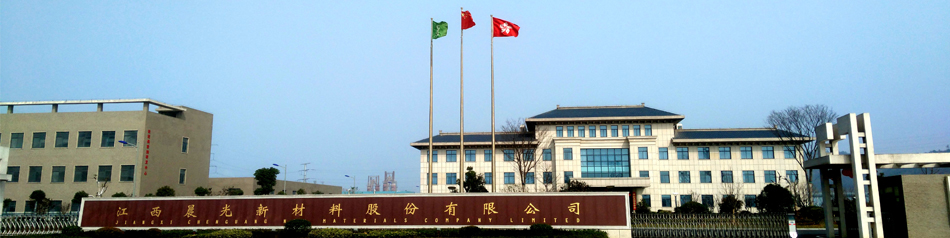


 TallKee New Materials is a silane coupling agent manufacturer in China. Our high-tech enterprise and its subsidiary Jiangsu Chenguang Silane Co., Ltd focus on the R&D, manufacture and sales of coupling agent, coupling agent monomer, coupling agent intermediate and other coupling agent products.